
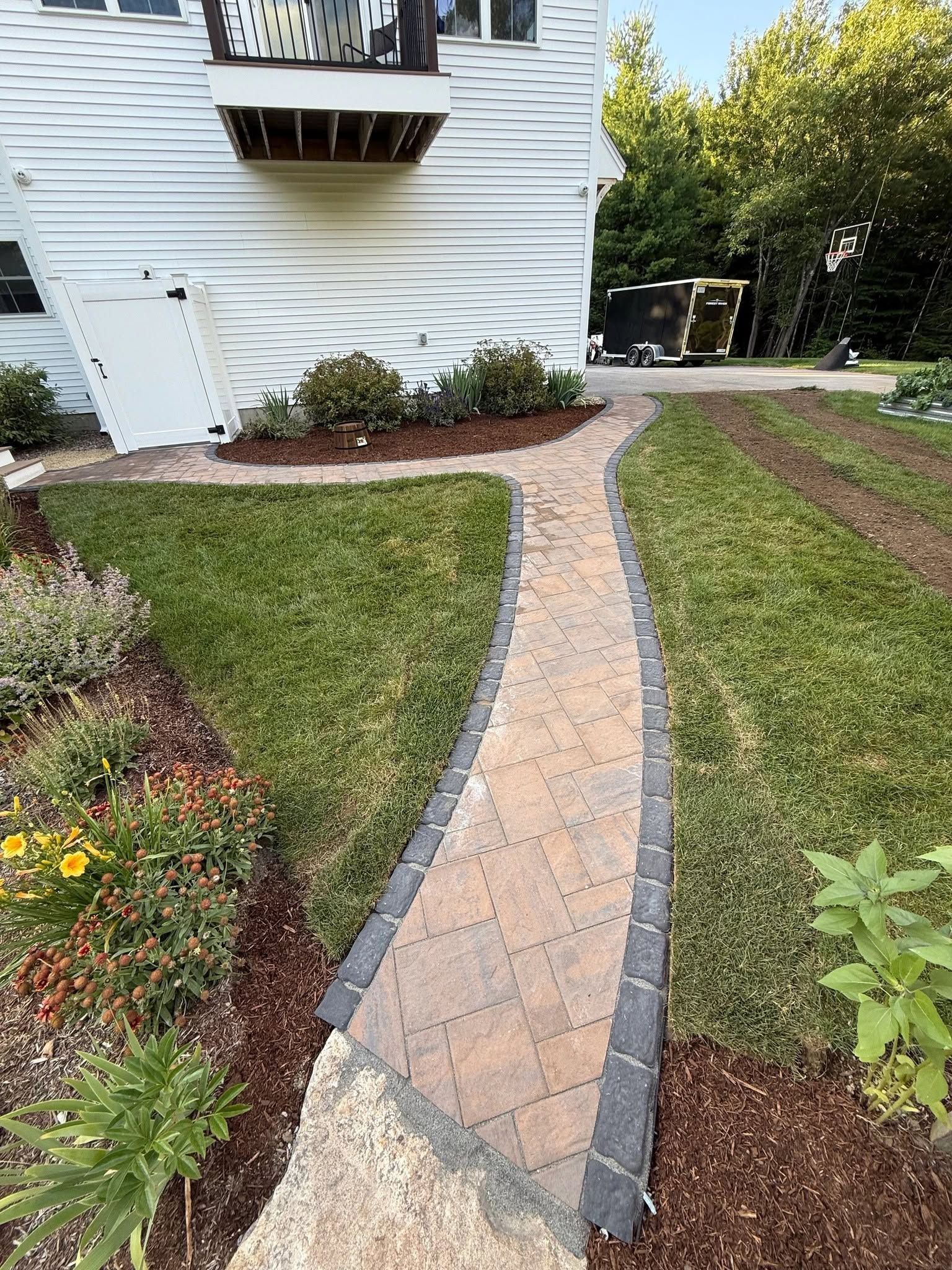
Permanent Features That Define Outdoor Spaces
Hardscaping in Hudson for properties with drainage concerns, undefined landscape areas, or need for durable walkways and walls
Proper hardscaping installation determines whether patios remain level, walkways resist frost heave, and retaining walls continue to manage grade changes without shifting. The work involves excavation to appropriate depth, base preparation using compacted stone, and material installation that accounts for Southern New Hampshire's freeze-thaw cycles. You end up with permanent outdoor features—patios, walls, walkways, fire pits, and decorative stone elements—that function correctly and integrate visually with surrounding landscape areas.
Epic Outdoor Scapes LLC installs hardscape features including granite and cobblestone elements, natural stone walls, paver patios, and defined walkways that direct foot traffic while managing water drainage. Each installation addresses the relationship between the hardscape feature and existing grade, ensuring that water moves away from structures and that permanent elements remain stable through seasonal ground movement.
Request a property assessment to identify how hardscape features can address drainage issues, define landscape zones, or create usable outdoor spaces on challenging terrain.
Why Base Preparation Determines Long-Term Performance
The durability of any hardscape feature depends on base preparation that prevents settling, allows drainage, and accommodates freeze-thaw movement without cracking or shifting. Installation involves excavating to depth determined by soil type and feature weight, installing layers of compacted gravel, and setting materials with joints that allow slight movement during temperature swings. Drainage grading ensures that water doesn't accumulate behind retaining walls or pool on patio surfaces, which would accelerate deterioration and create functional problems.
After installation, walkways remain level without developing trip hazards from frost heave, patio surfaces drain properly instead of holding standing water, and retaining walls continue to manage grade changes without bowing or developing drainage issues behind the wall. Materials maintain their position through seasonal cycles rather than requiring frequent releveling or joint repairs.
Hardscaping also establishes the framework for landscape design, creating defined edges between planting beds and functional areas, directing foot traffic along intended paths, and solving grade problems that previously limited how you could use different sections of your property. The choice between materials like natural stone, pavers, granite, or cobblestone affects both visual appearance and maintenance requirements over time.
Questions Before Starting Your Project
Homeowners considering hardscape projects in Hudson often have questions about material durability, installation methods, and how different features integrate with existing landscape elements.
What determines which hardscape materials are appropriate for a specific project?
Material selection depends on the feature's purpose, exposure to freeze-thaw cycles, drainage requirements, integration with existing landscape elements, and whether the surface will support foot traffic, furniture, or decorative use only.
How does installation prevent frost heave damage common in Southern New Hampshire?
Proper base depth and compacted gravel layers allow drainage while providing stable support, and joint materials permit slight seasonal movement without cracking, preventing the displacement that occurs when bases are too shallow or poorly drained.
What happens to drainage when hardscape features are added?
Installation includes grading adjustments that direct water away from structures and toward appropriate drainage areas, preventing the pooling or erosion that occurs when impermeable surfaces are added without addressing water redirection.
How do retaining walls, patios, and walkways work together in a landscape design?
Features are planned to create cohesive outdoor spaces where walls define level areas, patios provide functional gathering zones, and walkways connect different areas while managing grade changes and directing foot traffic.
When should hardscape installation occur relative to planting and other landscape work?
Hardscape features are typically installed after any necessary excavation and drainage work but before final grading and planting, allowing heavy equipment access while protecting finished surfaces during subsequent phases.
Epic Outdoor Scapes LLC installs hardscape features with base preparation and drainage planning suited to Southern New Hampshire conditions, creating permanent outdoor elements that remain functional through seasonal cycles. Contact our team to discuss material options, project phasing, and how hardscaping addresses your property's specific grade and drainage conditions.