
Lighting That Extends Property Use After Dark
Landscape Lighting in Hudson for improving nighttime visibility and showcasing outdoor features after sunset
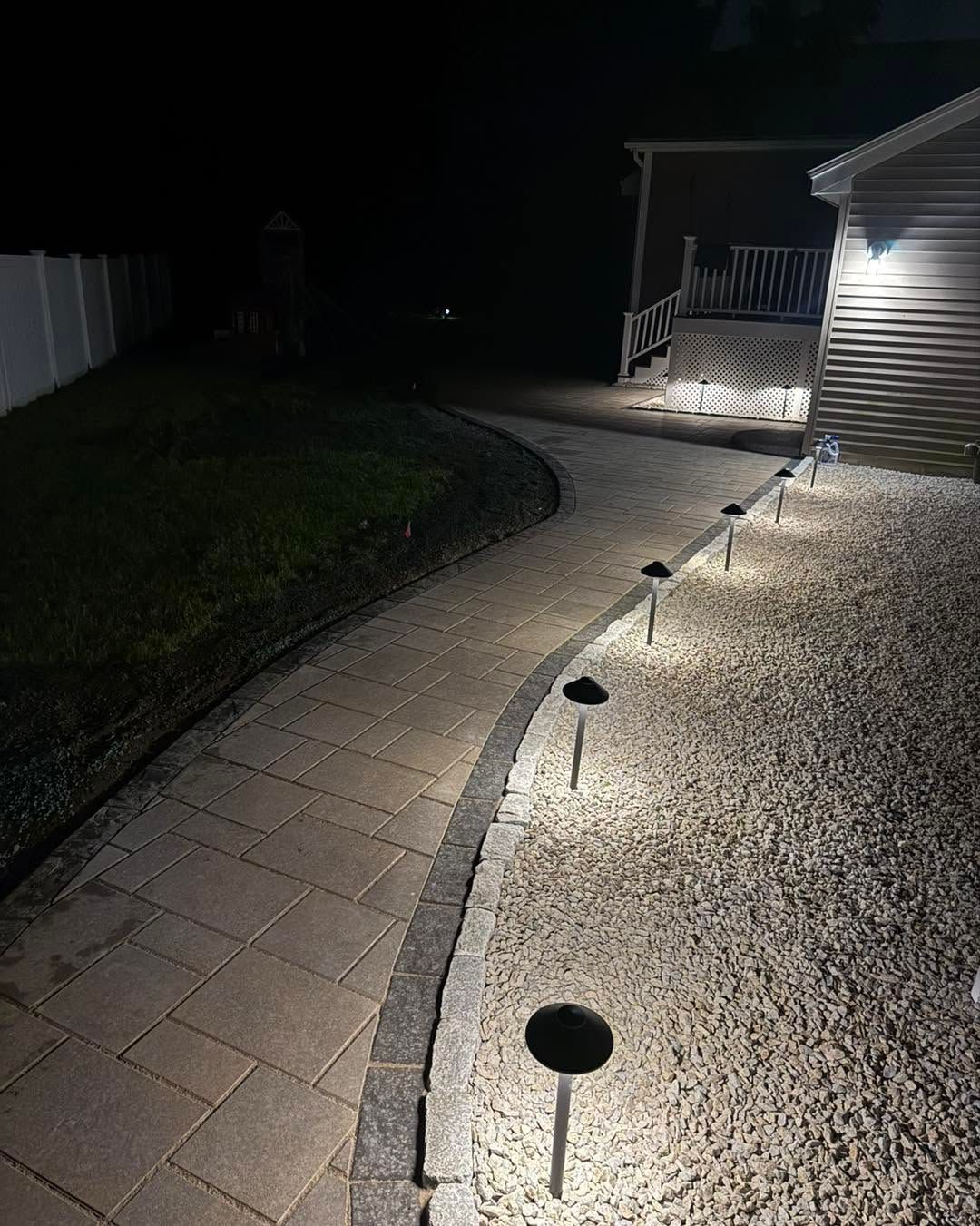
Landscape lighting positioned along walkways, near entrances, around patios, and within planting areas changes how your property functions after dark by illuminating routes, highlighting hardscape and landscape features, and reducing unlit zones where visibility drops. The system uses low-voltage fixtures wired through landscape areas to transformers that step down household current, allowing safe installation near water features, planting beds, and high-traffic zones. Epic Outdoor Scapes LLC installs landscape lighting for Hudson properties where nighttime use of outdoor spaces matters—whether for safe navigation between driveway and entrance, extending patio use into evening hours, or showcasing retaining walls, specimen plantings, and architectural details.
Fixture placement depends on what needs illumination: path lights spaced along walkways to define edges and prevent tripping hazards, spotlights aimed upward to graze textured stone walls or tree trunks, and downlights mounted in structures or trees to cast ambient light over seating areas without glare at eye level. Wire runs are buried below mulch or turf, routed to avoid future digging for plantings or hardscape changes, and connected to zone-controlled transformers that allow separate timing or dimming for different areas.
Request a site assessment to identify lighting priorities, fixture locations, and power routing through your landscape.
What You Notice Once Lighting Is Installed
Your property remains navigable after dark without relying on harsh floodlights, with fixtures directing light downward onto walkways or upward onto features rather than spilling into neighboring yards or windows. Path lights mark route edges clearly enough to prevent missteps without over-lighting, and accent fixtures reveal textures in stone walls, foliage layers, or water features that disappear in darkness without illumination.
Once the system is active, you'll see how zoned control allows different areas to operate on separate schedules—entrance lighting stays on longer than patio zones, or decorative accent lights shut off earlier than safety path lighting. LED fixtures reduce energy consumption and lamp replacement frequency compared to halogen bulbs common in older systems, and color temperature choices affect ambiance, with warmer tones creating inviting gathering spaces and cooler tones providing task visibility around cooking or work areas. Fixtures integrate visually with the landscape, using finishes that blend with stone, soil, or plant material rather than standing out as obvious equipment during daylight hours.
Lighting installation coordinates with other landscape and hardscape work to avoid re-trenching for wire runs, and fixture placement adjusts as plant material matures—spotlights positioned to highlight small trees may need relocation or aiming adjustments as canopy size increases. Maintenance involves occasional lens cleaning to remove pollen, dirt, or spider webs that diffuse light output, and checking connections at fixtures and transformers to confirm secure contact where corrosion or moisture intrusion can degrade performance over time.
What Property Owners Usually Ask
Lighting systems involve fixture selection, power requirements, and integration with Hudson landscape features, and these questions address common planning and performance concerns.
What voltage do landscape lighting systems use?
Low-voltage systems operate at twelve volts stepped down from household current by transformers, allowing safer installation in wet areas, around planting beds, and near water features compared to line-voltage fixtures.
How are fixtures positioned to avoid glare?
Path lights aim downward with shielded bulbs, accent spotlights are placed low and directed upward toward features, and fixtures near seating areas are positioned outside direct sightlines to prevent discomfort while maintaining functional illumination.
What fixture types work for different landscape areas?
Path lights along walkways define edges, well lights set into hardscape uplight walls or trees, bullet-style spotlights mount on stakes for adjustable aiming, and downlights in pergolas or trees cast ambient light over gathering spaces.
How does landscape lighting handle Hudson winters?
Fixtures rated for outdoor use tolerate freeze-thaw cycles and snow cover, LED lamps function in cold temperatures without warm-up delays, and wire connections below frost depth remain stable through seasonal ground movement.
When should lighting be installed relative to other landscape work?
Lighting installation typically follows hardscape completion and major planting so wire routes avoid areas that may be excavated later, though rough wire runs can be placed earlier if landscape plans are finalized and unlikely to change.
Epic Outdoor Scapes LLC plans landscape lighting to improve nighttime visibility, highlight features across patios and planting areas, and coordinate with existing outdoor spaces on your Hudson property. Schedule a consultation to discuss fixture placement, zone control, and how lighting integrates with your landscape and hardscape layout.