
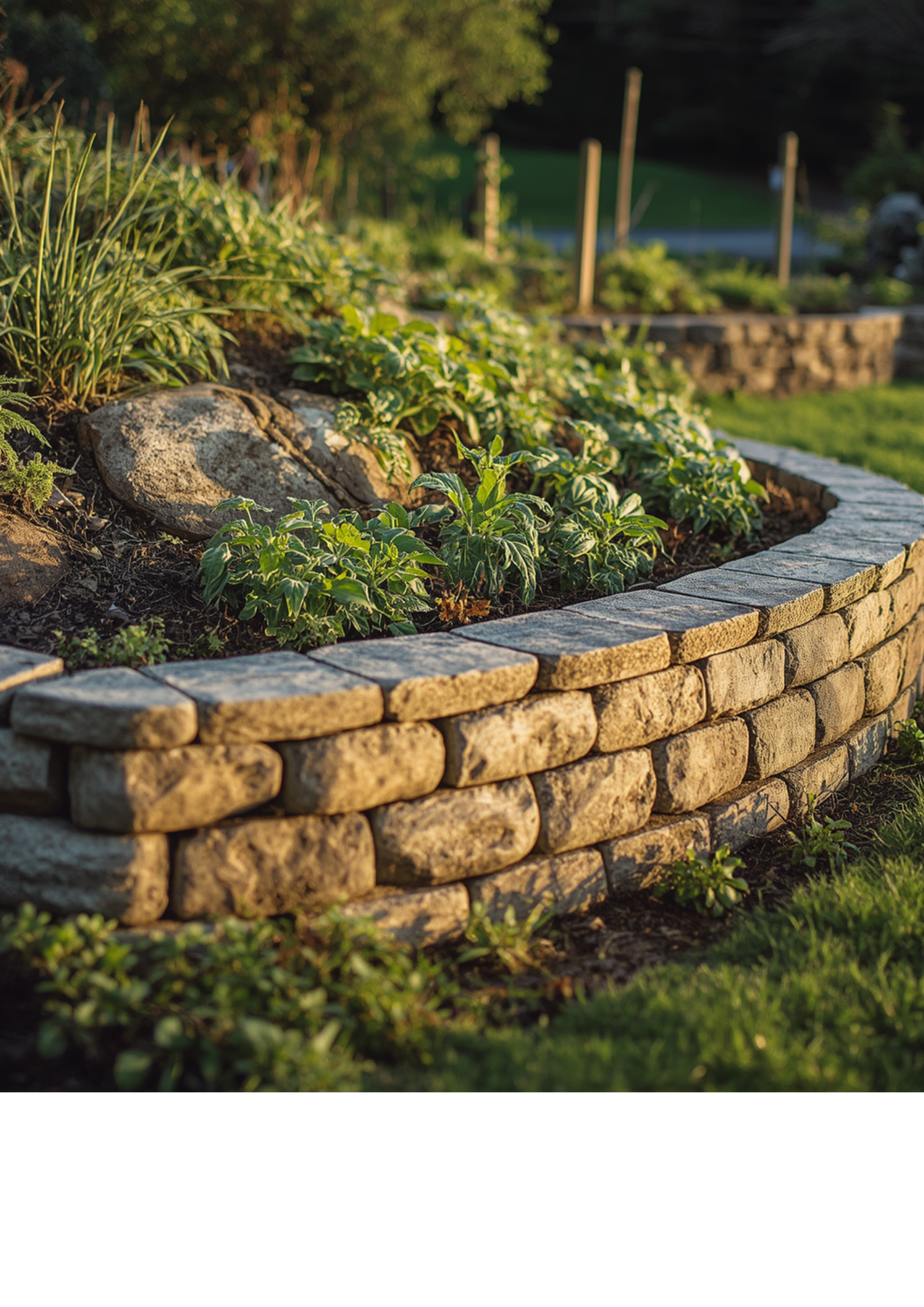
Structures That Create Usable Outdoor Space
Retaining Walls in Hudson for sloped properties, erosion control, landscape level changes, and creating functional yard areas
Sloped yards limit how you can use outdoor space, create erosion problems during heavy rain, and make mowing or landscaping difficult. Retaining walls manage grade changes by holding back soil, creating level areas for patios or planting beds, and directing water along controlled paths instead of allowing runoff to erode slopes or pool near structures. Epic Outdoor Scapes LLC installs retaining walls that address your property's specific grade conditions while integrating with patios, walkways, and plantings to create cohesive landscape zones suited to Southern New Hampshire terrain.
The installation process includes excavation to stable soil, base preparation for structural support, drainage systems behind the wall to prevent water pressure buildup, and material selection that withstands freeze-thaw cycles. Each wall is positioned to maximize usable space while addressing how water moves across your property during storms or snowmelt.
Schedule a site evaluation to review grade challenges, erosion patterns, and how retaining walls can create level areas suited to your intended use.
What Drainage Behind the Wall Prevents
Retaining wall failure typically results from water pressure buildup behind the wall, which occurs when drainage isn't addressed during installation. Proper construction includes a gravel backfill layer that allows water to drain downward, perforated pipe at the base that channels water to designated outlets, and weep holes or drainage gaps that prevent hydrostatic pressure from pushing the wall forward. Material selection considers both structural requirements for the wall height and durability through seasonal ground movement in Hudson's climate.
Once completed, you notice level areas where slopes previously made outdoor use difficult, erosion stops along sections where runoff previously carved channels, and water drains through the wall system rather than accumulating behind it. The wall remains plumb through freeze-thaw cycles instead of developing the forward lean that indicates drainage failure or inadequate base preparation.
Retaining walls also define landscape zones, creating raised planting beds with improved drainage, supporting patio edges on sloped properties, and providing visual structure that integrates with walkways and other hardscape features. The wall material—whether natural stone, concrete block, or timber—affects installation method, expected lifespan, and how the structure blends with your overall landscape design.
Common Questions About This Service
Property owners dealing with sloped terrain often ask how retaining walls address grade problems, what drainage systems involve, and how walls integrate with other landscape features.
How tall can a retaining wall be before engineering is required?
Wall height limits depend on local building codes and soil conditions, with taller walls requiring engineered designs that specify base depth, reinforcement methods, and drainage systems adequate for the soil load being retained.
What drainage system prevents water pressure from damaging the wall?
Installation includes gravel backfill that allows water to percolate downward, perforated drainage pipe at the wall base that channels water to outlets, and provisions like weep holes that relieve hydrostatic pressure before it can push the wall forward.
How does a retaining wall create usable space on sloped properties in Hudson?
The wall holds back soil to create a level area above or below the structure, transforming slopes into functional zones for patios, lawn areas, or planting beds that would otherwise be too steep for practical use.
What material choices affect wall performance and appearance?
Natural stone provides irregular texture and blends with informal landscapes, while concrete block offers uniform appearance and engineered strength, with each material selected based on wall height, drainage requirements, and integration with existing hardscape features.
When should retaining wall installation happen relative to patio or walkway projects?
Walls are typically installed first to establish grade levels and drainage patterns, allowing patio and walkway installation to integrate with the level areas created by the wall structure.
Epic Outdoor Scapes LLC builds retaining walls with proper drainage, base preparation, and material selection to manage grade changes and create functional outdoor areas on sloped properties. Request an estimate based on your property's grade conditions, erosion patterns, and how you want to use the space created by the wall.